

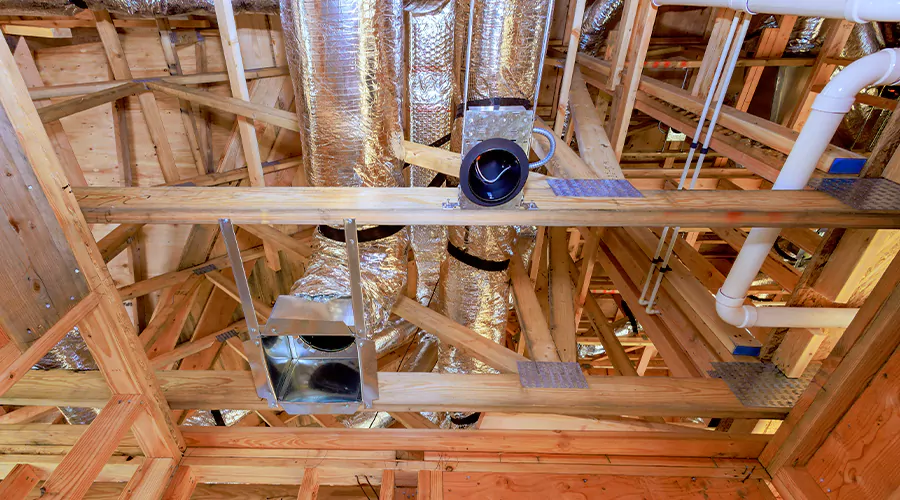
Fixing leaky air ducts typically costs $200 to $1,000 for residential ductwork repairs in the United States in 2026, with a national average of approximately $600. Sealing an individual leak generally costs $150 to $500, while replacing a damaged duct section can cost $400 to $1,500. The final price depends on the location of the leak and the work required to restore an airtight connection.
Leaky air ducts allow heated or cooled air to escape before reaching the intended rooms. Return-side leaks can also pull unfiltered air from attics or crawlspaces into the HVAC system. ENERGY STAR estimates that typical homes lose approximately 20% to 30% of the air moving through their duct systems because of leaks and poorly connected ducts.
Repair costs vary because not every leak requires the same solution. A small opening at an exposed metal joint may only need suitable sealant, while a torn flexible duct hidden above a finished ceiling can require replacement. Understanding the different repair costs helps homeowners compare estimates and avoid paying for work that does not address the actual problem.
What Is the Average Cost to Repair Leaky Air Ducts in 2026?
The average residential ductwork repair costs approximately $600 in 2026, with many projects falling between $200 and $1,000. Smaller repairs typically involve sealing accessible gaps or reconnecting loose fittings. Projects involving concealed ductwork or damaged materials can cost considerably more because they require additional labor.
The following figures are broad U.S. estimates rather than guaranteed prices for a particular home. Each category represents a different type of repair, and several tasks may already be included in one contractor's estimate.
| Duct Repair Service | Estimated Cost in 2026 |
|---|---|
| Minor vent repair or reattachment | $100 to $250 |
| Sealing an individual duct leak | $150 to $500 |
| Patching holes or cracks | $200 to $600 |
| Reconnecting disconnected ductwork | $250 to $700 |
| Repairing damaged duct insulation | $200 to $800 |
| Replacing a damaged duct section | $400 to $1,500 |
| Typical ductwork repair project | $200 to $1,000 |
| Extensive damage involving multiple sections | May exceed $1,000 |
These estimates show why identifying the problem before requesting repairs is important. A loose connection may be repairable without replacing the duct, while a severely crushed flexible section may not be suitable for patching. The amount of damage is often more important than the number of vents in the home.
Labor also affects the final price. An accessible joint may take relatively little time to repair, while a concealed section can require opening surrounding materials. Two homes with the same type of leak may therefore receive different estimates.
What Factors Affect the Cost of Fixing Leaky Air Ducts?
Duct repair costs depend primarily on the type of damage and how easily workers can reach the affected section. The duct material also influences which repair methods are suitable. Our air duct repair team evaluates these factors before recommending a solution. Understanding these factors makes it easier to determine whether an estimate reflects simple sealing or more extensive reconstruction.
Size and Number of Air Leaks
A small opening along one metal seam usually costs less to repair than several disconnected branches. An individual leak may be sealed with HVAC-rated mastic or approved metal-backed foil tape when the underlying connection is sound. Larger openings can require reinforcement or installation of a metal patch.
Multiple leaks increase labor because each affected location must be found and repaired. The work may also involve different parts of the duct system, including supply branches and return connections. A whole-system sealing project should therefore not be priced like one accessible joint.
Type of Duct Material
Residential HVAC systems commonly contain rigid sheet metal ducts or insulated flexible sections. Metal ducts may be suitable for sealing or patching when the surrounding material remains structurally sound. Flexible ducts can require more extensive repair when the inner air-carrying liner becomes torn.
Fiberglass duct board also requires a different approach because it cannot be repaired in the same way as rigid metal. The correct sealing method depends on its construction and the condition of the damaged area. Using an unsuitable method can create additional leaks or damage the duct material.
Location of the Damaged Duct
The accessibility of the leak is one of the largest factors affecting repair cost. Ductwork exposed in an unfinished basement is easier to examine than a connection concealed inside a wall. Attic and crawlspace repairs may also require extra time because of limited access.
A small leak hidden above finished drywall can cost more than a larger opening on an exposed metal duct. Workers may need to create an access opening and restore the surrounding material after completing the repair. These additional tasks should be identified separately when comparing estimates.
Condition of Existing Connections
A sound connection with a narrow leak can often be sealed without replacing the duct. However, a joint that has separated must first be mechanically secured. Applying sealant over an unstable connection can result in another failure.
Older sealing materials may also need removal when they are loose or deteriorating. New tape and mastic require suitable surface preparation to bond properly. This preparation can increase labor even when the actual leak appears small.
Damage to Duct Insulation
Duct insulation helps limit heat transfer and condensation when ductwork passes through unconditioned spaces. A repair involving the inner air passage may also require restoration of damaged insulation around the connection.
Wet insulation creates an additional concern because it may not be suitable for reuse. If water damage is present, the moisture source must be identified before affected material is restored. Simply covering damaged insulation can conceal a continuing problem.
How Much Does Duct Repair Cost by Location?
The location of damaged ductwork affects how quickly a repair can be completed. Exposed ducts generally provide easier access for inspection and sealing. Concealed systems require more labor because workers may need to reach the duct through finished building materials.
| Duct Location | Estimated 2026 Repair Cost |
|---|---|
| Exposed basement or utility room | $150 to $400 |
| Accessible attic | $200 to $600 |
| Crawlspace | $300 to $800 |
| Inside finished walls or ceilings | $400 to $1,200 |
| Beneath a concrete slab | $500 to $2,500 |
These estimates apply to different levels of access and repair complexity. They are not additional fees that must be added to every duct repair. A straightforward attic leak may cost less than a complicated basement repair when the actual damage is different.
Concealed ductwork often creates the largest uncertainty in the estimate. The visible symptoms may indicate where the problem occurs, but the condition of the duct may not be known until access is available. Asking how the affected section will be reached helps clarify why one estimate is higher than another.
How Much Does Repairing Different Duct Materials Cost?
The material used to construct ductwork determines how a leak can be sealed or patched. Flexible ducts may need a liner repair or partial replacement, while sheet metal often allows more direct sealing of sound joints. Fiberglass duct board requires methods that preserve the material's structure.
Published 2026 U.S. estimates for repairs involving approximately 30 linear feet of ductwork show the following ranges.
| Duct Material | Estimated Repair Cost |
|---|---|
| Flexible nonmetallic ductwork | $200 to $800 |
| Flexible aluminum ductwork | $200 to $850 |
| Fiberglass duct board | $250 to $900 |
| Sheet metal ductwork | $250 to $1,000 |
These figures are project benchmarks rather than prices for repairing one small hole. A minor opening on a sound metal duct may cost much less than work involving a long damaged section. The extent of damage and the accessibility of the material still determine the actual scope.
A flexible duct with a badly torn inner liner may be better suited to replacement than repeated patching. Similarly, sheet metal with extensive corrosion may not provide a stable surface for a permanent repair. Selecting the correct method helps prevent paying for the same problem more than once.
How Much Does Air Duct Sealing Cost?
Air duct sealing can cost approximately $400 to $1,900 for a manual sealing project in 2026. This type of work commonly involves applying mastic or approved HVAC tape to accessible joints. Aerosol-based internal duct sealing generally costs more because it uses specialized equipment.
The correct method depends on the locations and sizes of the leaks. Manual sealing is useful for exposed connections that can be reached directly. Internal aerosol sealing may be considered for suitable systems with smaller openings that are difficult to access, but it cannot restore a disconnected branch or a severely damaged duct.
| Sealing Method | Estimated 2026 Cost | Typical Application |
|---|---|---|
| Individual leak sealing | $150 to $500 | One accessible joint or opening |
| Manual duct sealing project | $400 to $1,900 | Several accessible joints and seams |
| Aerosol-based duct sealing | $1,300 to $2,700 | Suitable concealed leaks within the product's limits |
| Damaged duct section replacement | $400 to $1,500 | Material that cannot be reliably sealed |
An aerosol sealing project should not automatically be considered a replacement for mechanical repairs. Large openings and disconnected sections usually require direct physical correction. The proposed work should identify which leaks are being sealed and whether any sections need replacement first.
How Much Does Labor Add to Air Duct Repair Costs?
HVAC labor commonly costs approximately $75 to $150 per hour in 2026, depending on the market and the type of work. Many routine duct repairs take between one and four hours when the damaged sections are accessible. Larger projects may require more time because several connections need repair.
Some contractors charge a diagnostic or service-call fee of approximately $75 to $200. This fee may cover an initial inspection and may or may not be credited toward the repair. The estimate should explain whether testing and labor are included in the quoted price.
Emergency work or after-hours visits can also increase expenses. However, routine duct leakage generally does not require an emergency appointment unless it creates a specific safety or equipment concern. Planning nonurgent repairs during normal service hours may reduce additional charges.
The most important pricing distinction is between labor required to locate a leak and labor required to repair it. A visible disconnected duct may be easy to identify, while concealed leakage can require specialized testing before work begins.
How Much Does Air Duct Leak Testing Cost?
Professional duct leakage testing commonly costs approximately $250 to $500 for many residential projects in 2026. Testing uses calibrated equipment to measure air escaping from the duct system under defined pressure conditions. It is particularly useful when leakage is suspected but the openings cannot be identified through visual inspection.
A duct leakage test provides more reliable information than simply feeling for drafts around accessible connections. The test can measure overall leakage and help establish whether sealing work improves the system. However, a total leakage measurement does not automatically identify the location of every opening.
Basic inspections may cost less when the problem is already visible. A disconnected flexible duct in an unfinished basement may not require a full pressure test before repair. The need for testing depends on how much uncertainty remains about the condition of the system.
Can You Fix Leaky Air Ducts Yourself?
Some minor duct leaks can be repaired by homeowners when the damaged section is safely accessible and structurally sound. An exposed metal joint with a small gap may be suitable for HVAC-rated mastic or approved metal-backed foil tape. More complicated damage requires additional care because sealing materials cannot restore a collapsed duct or disconnected fitting by themselves.
Before attempting a small repair, identify whether the opening belongs to the heating and cooling air distribution ducts. Combustion exhaust pipes and furnace flues are separate components with different safety requirements. Ordinary duct sealing materials must not be applied to fuel-burning appliance exhaust systems.
A basic household inspection can help identify manageable problems:
- Turn off the HVAC system and wait until the blower stops.
- Inspect safely accessible ducts for visible gaps or failed seals.
- Confirm whether the affected joint remains mechanically secure.
- Check whether the surrounding material is sound and dry.
- Select sealing materials approved for that duct application.
- Follow the product's installation and curing instructions.
- Restore normal operation only after the repair is complete.
Do not attempt repairs in unsafe attic spaces or disturb unfamiliar older insulation. Damaged flexible liners and extensive corrosion may require replacement rather than simple sealing. Household repairs should remain limited to conditions that can be identified and addressed without modifying the system's layout.
What Are the Warning Signs That Leaky Ducts Need Repair?
Duct leakage may become noticeable through weak airflow or uneven room temperatures. However, these symptoms can also result from dirty filters or airflow restrictions. A physical opening in the duct provides stronger evidence than comfort problems alone.
Common warning signs include:
- One room receives noticeably less conditioned air than nearby rooms.
- Energy bills increase without an obvious change in usage.
- Air escapes from a visible supply duct connection.
- A flexible duct has separated from its fitting.
- Return duct connections contain visible gaps.
- Dust appears near damaged return-side connections.
- A room remains uncomfortable despite normal thermostat settings.
- Duct insulation appears torn or displaced.
- Whistling occurs near a specific accessible joint.
- Several connections show deteriorating sealing materials.
These observations can help locate possible problems but do not measure the full amount of leakage. A duct system may contain hidden openings even when exposed connections look intact. The repair scope should reflect actual findings rather than assume every comfort complaint is caused by leakage.
Is It Cheaper to Repair or Replace Leaky Ductwork?
Repair is usually less expensive when damage affects one accessible joint or a short sound duct section. Replacement becomes more practical when the material has extensive tears or corrosion. The decision should account for whether a repair can restore a reliable connection without creating new airflow restrictions.
A single leaky joint may cost $150 to $500 to seal, while replacing a damaged duct section commonly costs $400 to $1,500. However, repeatedly patching material that continues deteriorating can eventually cost more than replacing the affected section once.
| Duct Condition | Common Approach | Cost Consideration |
|---|---|---|
| Small gap at sound joint | Seal the connection | Usually a lower-cost repair |
| Loose but undamaged fitting | Reconnect and seal | Labor depends on accessibility |
| Small hole in sound metal | Patch and seal | Approximately $200 to $600 |
| Severely torn flexible duct | Replace affected section | Approximately $400 to $1,500 |
| Widespread material deterioration | Evaluate larger replacement | Requires a broader estimate |
The condition of the material should determine the decision rather than its age alone. Older metal ducts may remain serviceable when structurally sound, while relatively new flexible ducts can require replacement after physical damage. A properly scoped estimate should explain why the chosen repair is expected to last.
Can Repairing Leaky Air Ducts Lower Energy Bills?
Repairing leaking ducts can reduce energy waste when heated or cooled air has been escaping into unconditioned spaces. The benefit depends on how much leakage existed and where it occurred. Sealing a major supply leak in an attic can provide a more noticeable improvement than closing a small opening inside conditioned space.
ENERGY STAR states that typical residential duct systems lose approximately 20% to 30% of moving air through leaks and poor connections. That figure is not a guaranteed reduction in energy bills after repair. Actual savings depend on the duct system and the home's heating and cooling needs.
Repairing return-side leaks may also reduce the amount of unfiltered attic or crawlspace air entering the HVAC system. This can help the equipment operate under more appropriate conditions. However, duct sealing does not correct every source of high energy use because insulation and HVAC performance also matter.
When Should You Call an HVAC Professional?
Professional repair is appropriate when leaks involve concealed ductwork or damaged sections that cannot be restored through simple sealing. Multiple disconnected branches and substantial flexible duct damage also require evaluation. Specialized testing may be useful when the location or amount of leakage remains uncertain.
A qualified HVAC technician can inspect the duct system and identify connections that need mechanical repair. Testing may also be used to measure leakage before and after the work. The technician should evaluate airflow when significant changes are made to the duct system.
Professional assessment is particularly important in homes with fuel-burning appliances because duct pressure changes can affect combustion venting under certain conditions. Combustion safety testing may be appropriate after extensive duct sealing. The work should restore airtightness without creating other airflow or safety problems.
How Can You Prevent Future Air Duct Repair Expenses?
Preventing future duct leaks involves protecting existing connections and identifying damage early. Proper support helps flexible ducts remain attached without excessive stress, while suitable sealing materials reduce the likelihood of joint failure. Regular observation of accessible sections can help prevent minor damage from becoming a larger repair.
Protect Exposed Ductwork
Avoid storing heavy objects on flexible ducts or using them for support while moving through an attic. Physical pressure can damage the inner liner and loosen connections. Check exposed sections after nearby renovation work because construction activity can disturb previously secure joints.
Inspect Visible Connections
Examine safely accessible duct joints during seasonal HVAC maintenance. Look for peeling sealant or loose fittings that may allow air to escape. A connection that is beginning to separate may be easier to repair before the duct becomes completely disconnected.
Maintain Proper Duct Support
Flexible ducts should be supported according to their installation requirements without sharp bends or excessive sagging. Poor support can place stress on collars and reduce the available airflow passage. Correcting these conditions helps limit future connection failures.
Monitor Heating and Cooling Performance
Pay attention when one room suddenly becomes difficult to heat or cool. Check the filter and visible supply openings before assuming there is a duct leak. If unusual symptoms continue, investigate the affected duct branch before additional damage occurs.
Conclusion
Fixing leaky air ducts typically costs $200 to $1,000 in 2026, although individual repairs and concealed damage can fall outside that range. Sealing a sound joint is generally less expensive than replacing damaged ductwork. The final price depends on accessibility and material condition. Correct diagnosis helps prevent unnecessary expenses. This week, inspect safely accessible duct connections for gaps or deteriorating seals.